Launch.
Client
University of the Built Environment
Sector
Public sector/Not for profit
Services
Digital experience

University College of Estate Management (UCEM) had reached a point where its name and identity no longer reflected its direction. While long recognised for its expertise in estate management, the institution’s scope had expanded into the wider built environment, with an increasing focus on sustainability, new courses, and a merger with the London School of Architecture. The brand no longer reflected the scale of its ambitions or the diversity of its offer.
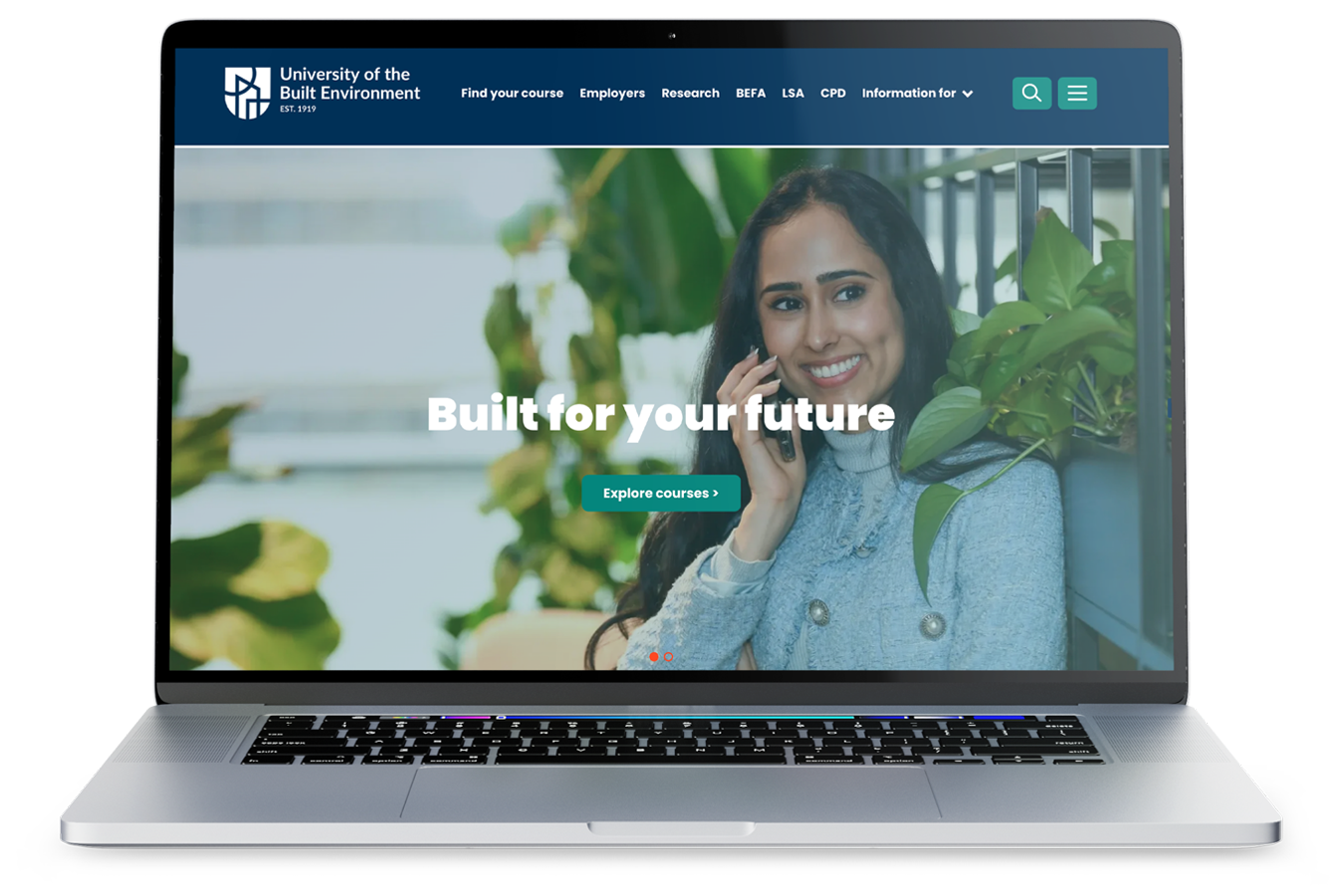
Alongside the name change, the University needed a refreshed website that could engage a broader audience. Since the original launch, both the site’s content and course offering had expanded, making an audit of the content structure and a simpler, more intuitive navigation essential to improving the user experience. The wider rebrand was also part of a larger push to strengthen reach and impact over the next decade, making it essential that the digital presence aligned with the newly developed identity and expanded ambitions.
To deliver on this, UCEM turned to onebite. Having already partnered with us on website projects, PR and targeted campaigns promoting their sustainability ambitions and degree apprenticeships, the University trusted us to bring both the technical expertise and collaborative approach needed to manage the complexities of a full website refresh and site migration as part of the wider rebrand.
The University trusted us to bring both the technical expertise and collaborative approach needed to manage the complexities of a full website refresh and site migration.

The updated brand reflected the University’s expanding role within the built environment. onebite’s role was to implement this identity across a refreshed, more intuitive website experience.
Alongside the new brand considerations for the website, there were important technical priorities. The UK and Hong Kong sites needed to be updated and aligned, while the migration to a new domain had to be managed carefully to protect traffic and SEO performance.
From the start, the team approached the migration strategically, treating it as both a website design refresh and a technical rebuild. With navigation and structure changes planned, it was essential to consider early on how these would affect existing pages and URLs. A detailed redirect plan was created to ensure all traffic from the old site would route to the most relevant new pages, protecting search visibility and user experience. This was especially important for high-performing pages identified through Google Search Console and Analytics data.
Early planning also focused on identifying dependencies and sequencing work to minimise disruption. From auditing existing URLs and performance data to defining the new information architecture and redirect map, these steps ensured high-performing content and SEO value were preserved.
The strategy was shaped collaboratively, with onebite and the client working closely to set priorities, refine content and plan a rollout designed to minimise risk.

The project began with a full audit of the UK site, assessing content, design, and technical performance. While the initial brief focused on applying the updated name and logo to the site, the scope widened into a complete website refresh, incorporating the new colours, fonts and design elements. To manage this, onebite created a staging version of the site, applying theme updates first before moving on to structure and content changes.
The Hong Kong site added an extra layer of complexity. Having diverged from the UK version over time, it needed to be re-synced and rebranded so that both sites could launch simultaneously. Careful planning and a hard deadline for copying the live site helped protect content and ensure a smooth transition.
Throughout the process, onebite worked in close partnership with the client’s web, marketing, and design teams, as well as the Hong Kong site manager. Weekly scrum-style meetings helped review progress and agree on next steps efficiently and collaboratively.
To manage risk, a detailed migration checklist guided each stage, covering URL redirects, metadata alignment, sitemap generation, and robots.txt configuration. The team conducted pre-launch SEO and performance testing, crawling the site to identify any broken links, redirect chains or missing metadata, and ensuring canonical tags and internal links were correctly configured. Core Web Vitals and mobile responsiveness were monitored to optimise load times and user experience.
Before the launch, all redirects were tested in the staging environment, and analytics, tracking codes, and Search Console configurations were validated to ensure continuity in reporting. Post-launch, the team continued to monitor crawl data, indexation, and site performance, resolving any issues quickly to maintain stability and visibility.
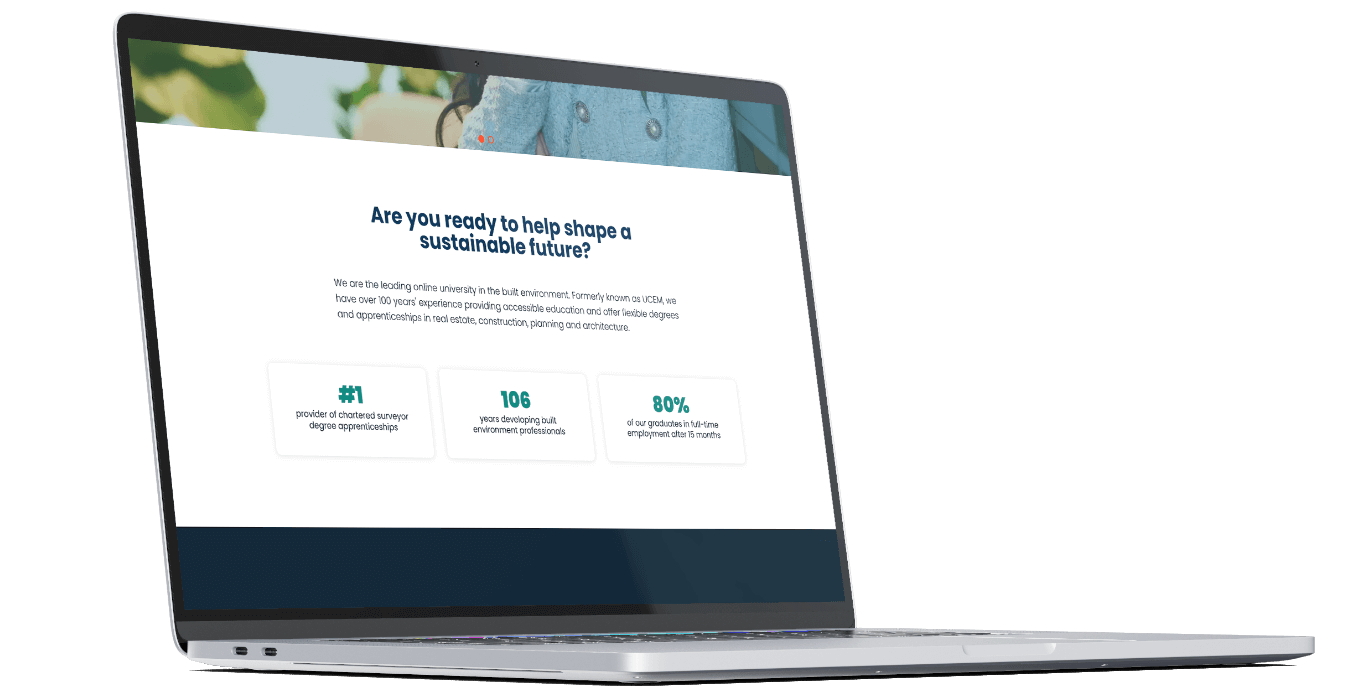
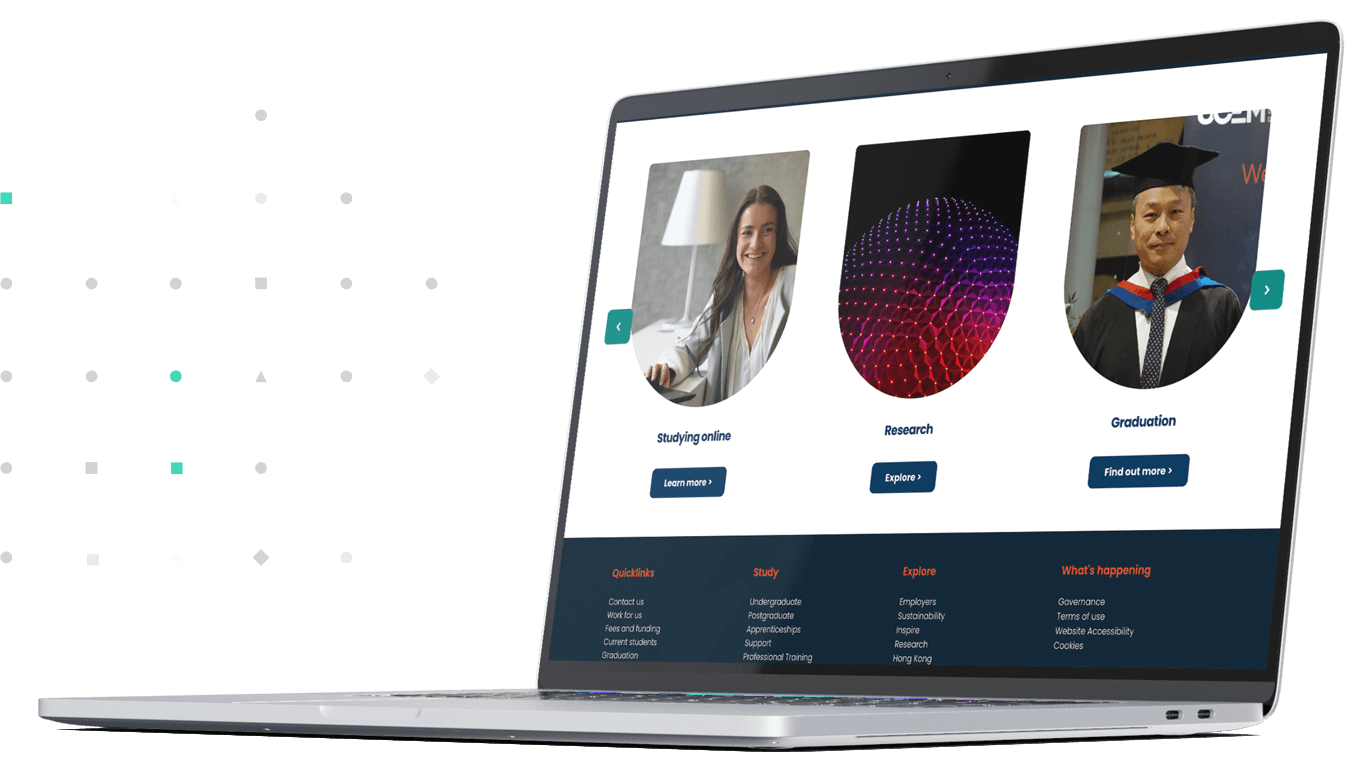
The usability of the site was refined with a brand new home page and by simplifying the main navigation menu, providing much clearer options for the user to navigate. Analytics and feedback were reviewed regularly to monitor performance and guide further improvements.
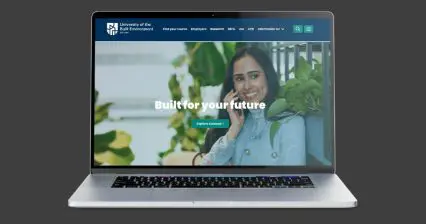
Both the UK and Hong Kong sites successfully launched on the same weekend and the impact of the relaunch was felt quickly. In the first twelve weeks following the new UK website going live, core engagement indicators lifted across the board:
Average engagement time per active user rose by
10%
Engaged sessions per active user increased by
13%
Total website views climbed by
27%
(evidence that foundational SEO migration work protected performance during a period that typically sees traffic disruption)
These early behavioural gains were reflected in the internal response. Feedback across the institution was consistently positive, with teams recognising the new identity’s potential to broaden the University’s appeal, attract more students and stakeholders and strengthen its long-term growth ambitions in the built environment sector.
Kim Davies, Director of Marketing, Communications and Brand at the University of the Built Environment, summed up the experience by saying:
On behalf of the team here, I want to thank you for your diligent, friendly and knowledgeable approach to the work undertaken for our new name and the website evolution. It became a bigger project than we expected, but the end result is incredible, and your expertise and calm manner ensured the project ran smoothly and on schedule. You enabled us to realise the vision for the website, scoping and planning the work effectively and providing us with regular updates so nothing was a surprise or issue.
Now relaunched as the University of the Built Environment, the institution is better positioned to reflect its ambitions, extend its reach, and strengthen its role within the sector.
Helping you create a compelling first impression for your next proposition or territory expansion.
Elevating your brand and building competitive advantage with a reinvigorated game plan.
Amplify.
Increasing brand visibility, demand generation and growing market share for the right audience.